 Accessibility Assistant



 NEET PG Brochure for the year 2026-2027
 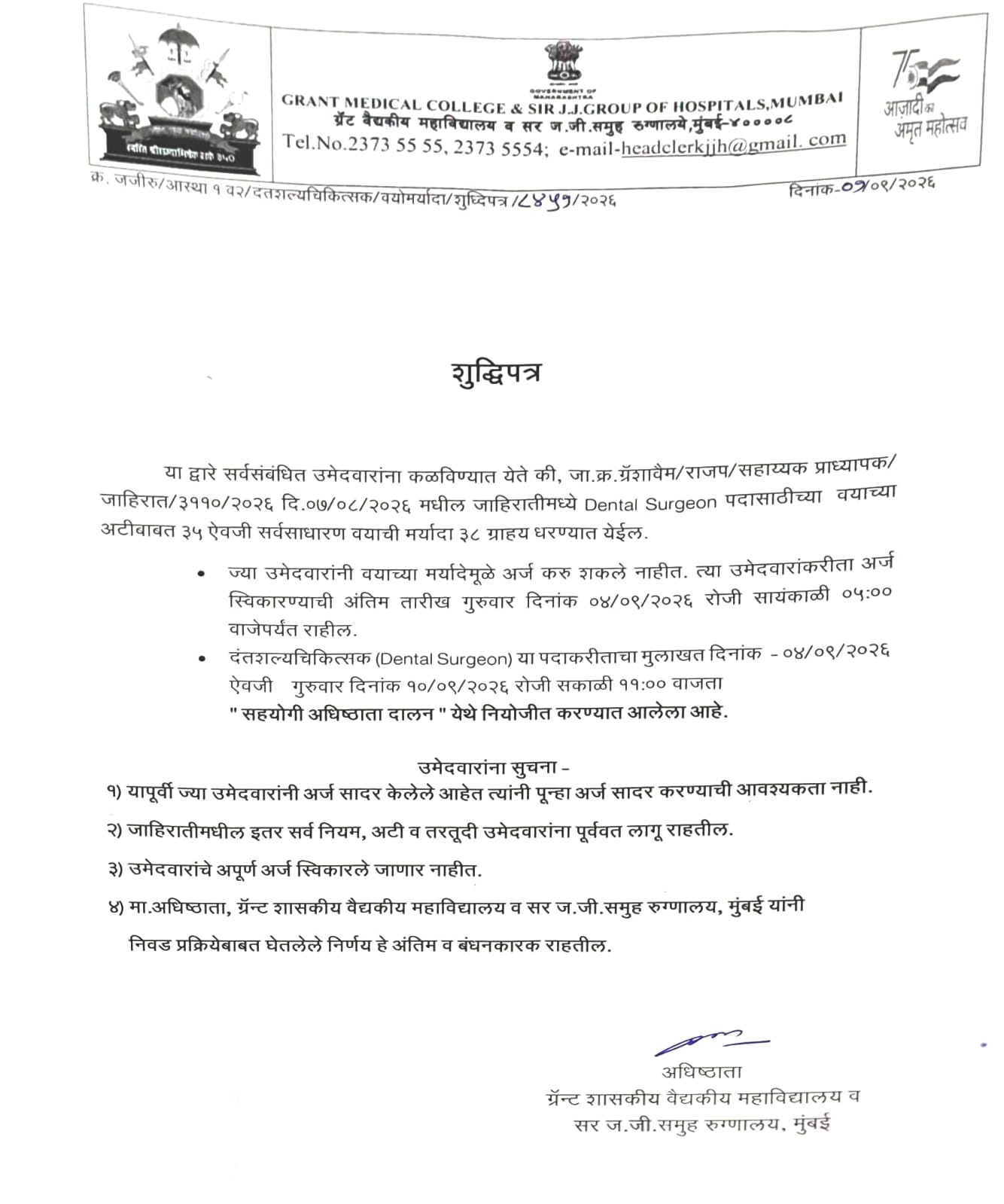 डेंटल सर्जन वयोमर्यादा सुधारणा पत्र
 PGMSR
As per PGMSR Amendment 2026
| Facility Name | Description |
|---|---|
| Administrative facility | The Office of Head of Department and Faculties cabins are located on 6th floor of Main Building JJH. Read More |
| Educational Facility | We have a fully equipped air conditioned seminar hall to accommodate 80 students along with a small intradepartmental museum and library. Read More |
| Clinical facility | Department has developed first Critical care Unit on first floor of Main Building. Our Anesthesiology Lab has ABG Analyzer. We have a Pre Anaesthesia clinic OPD on 6th floor nearby the Department of Anesthesia. We have hands on Mannequins for Airway workshop and CPCR workshops. We have advanced difficult airway equipments Read More |
| Year | Admitted PG Students | Avg. Daily OP | Avg. Daily Bed Occupancy | Total Major Surgeries | Total Minor Surgeries |
|---|---|---|---|---|---|
| 2025-2026 | 24 | 20 | NA | 14537 | 20607 |
| 2024-2025 | 27 | 20 | 0 | 14865 | 19367 |
| 2023-2024 | 30 | 25 | 0 | 17535 | 17555 |
| 2022-2023 | 30 | 22 | 0 | 17197 | 14815 |
 This Section Is Under ConstructionInformation will be available soon.This Section Is Under ConstructionInformation will be available soon.This Section Is Under ConstructionInformation will be available soon.
| Facility Name | Description |
|---|---|
| OPD 7- Blood Collection Center | OPD 7 serves as the designated blood collection centre for CCL Biochemistry, where patient samples are collected for biochemical investigations and subsequently processed/analyzed in the Central Clinical Laboratory.
Major investigations include:
1. Diabetic profile – Fasting, PP, Random glucose, GTT
2. Liver function tests
3. Kidney function tests
4. Lipid profile
5. Thyroid profile
6. Cardiac markers
7. Pancreatic profile
8. Anaemia profile
9. Bone profile
10. ABG analysis
11. Hb electrophoresis
12. Other specialized investigations such as D-dimer, hs-CRP, Free PSA and Testosterone. Read More |
| Central Clinical Laboratory - Blood Investigations | 1. Diabetic Profile - Sugar – Fasting, Post Prandial, Random & GTT
2. Lipid Profile - Total cholesterol, Triglycerides, HDL cholesterol, LDL cholesterol (calculated) , VLDL cholesterol ( calculated)
3. Liver Function Tests - Bilirubin – Total, Direct, Indirect, AST (SGOT), ALT (SGPT), Total protein, Albumin, Globulin, GGT, LDH
4. Kidney Function Tests - Urea, Creatinine, Ketone ( Qualitative), Uric acid, Urinary Protein, Urinary Creatinine, Urinary Calcium, Urinary Phosphorous, Urinary Protein: Creatinine Ratio, Bile salt & Bile Pigment (Urinary(, Urine BJ Protein, Stone Analysis
5. Thyroid Profile - T3, T4, TSH
6. Cardiac Marker- CKMB, Trop I
7. Pancreatic Profile - Lipase, Amylase
8. Anaemia Profile - Ferritin, Vitamin B12
9. ABG Analysis - pH, PO₂, PCO₂, SO₂, HCO₃, ctCO₂, Be(ecf), BB
10. Bone Profile - Calcium, Phosphorus, Magnesium, Alkaline Phosphatase, Vitamin D
11. Other tests - Fluid Analysis - Protein & Sugar, D Dimer, hs-CRP, Free PSA, Testosterone Read More |
| Special Laboratory (departmental) - Hb Electrophoresis (Hemoglobinopathies) | Hb Variant – Sickle cell anemia, Beta Thalassemia, HbD Punjab, HbE Read More |
| Course Name | Description |
|---|---|
| MBBS | The Bachelor of Medicine and Bachelor of Surgery (MBBS) programme at Grant Government Medical College, Mumbai, is a comprehensive undergraduate medical course designed in accordance with the National Medical Commission (NMC) Competency-Based Medical Education (CBME) curriculum. With an annual intake of 250 students, the programme provides rigorous academic training integrated with early clinical exposure, skill-based learning, simulation-based education, research orientation, and community-based healthcare experiences.
Students receive hands-on training at the renowned Sir J.J. Group of Hospitals, one of India's largest tertiary care teaching hospitals, offering exposure to a wide spectrum of clinical specialties and diverse patient populations. The curriculum emphasizes ethical practice, communication skills, professionalism, and lifelong learning, preparing graduates to become competent, compassionate, and socially accountable medical professionals. Read More |
| MD- BIOCHEMISTRY | The MD Biochemistry programme at Grant Government Medical College, Mumbai, is a three-year postgraduate degree programme that provides advanced training in clinical biochemistry, laboratory medicine, and biomedical research. With an annual intake of 7 postgraduate students, the programme is structured in accordance with the National Medical Commission (NMC) curriculum and emphasizes competency-based learning, evidence-based practice, and research excellence.
The department offers comprehensive training in clinical chemistry, endocrinology, immunochemistry, molecular diagnostics, quality assurance, laboratory management, and automation. Postgraduate students actively participate in diagnostic services, undergraduate and postgraduate teaching, seminars, journal clubs, case discussions, and interdisciplinary clinical meetings. They are also encouraged to undertake high-quality research, present scientific papers at national and international conferences, and publish in peer-reviewed journals.
The programme aims to develop competent laboratory physicians, academicians, and researchers capable of delivering high-quality diagnostic services and contributing to advances in medical science. Read More |
| Postgraduate Diploma in Medical Laboratory Technology (PG-DMLT) | The Postgraduate Diploma in Medical Laboratory Technology (PG-DMLT) is a two-year postgraduate diploma programme designed to provide advanced knowledge and practical training in medical laboratory sciences. With an annual intake of 12 students, the programme focuses on developing technical expertise in clinical biochemistry, hematology, microbiology, pathology, immunology, and laboratory diagnostics.
The curriculum combines classroom instruction with extensive hands-on training in modern diagnostic laboratories, emphasizing quality assurance, laboratory safety, instrument handling, and accurate interpretation of laboratory investigations. Students gain practical experience through exposure to a high-volume tertiary care teaching hospital, enhancing their diagnostic and analytical skills.
The programme prepares graduates for careers as skilled medical laboratory professionals in hospitals, diagnostic laboratories, research institutions, and healthcare organizations, while promoting professionalism, ethical practice, and continuous learning. Read More |
| BSc-PMT (Lab Sciences) | The Bachelor of Science in PMT (Laboratory Sciences) is a three-year undergraduate programme designed to prepare students for careers in medical laboratory sciences. With an annual intake of 60 students, the programme provides a strong foundation in clinical biochemistry, microbiology, pathology, hematology, immunology, and laboratory techniques.
The curriculum integrates theoretical knowledge with extensive practical training, enabling students to develop proficiency in diagnostic laboratory procedures, quality assurance, laboratory safety, and the operation of modern analytical instruments. Students receive hands-on training in well-equipped laboratories and gain clinical exposure through the diagnostic facilities of Sir J.J. Group of Hospitals.
The programme equips graduates with the knowledge and technical skills required to work as competent medical laboratory professionals in hospitals, diagnostic laboratories, research institutions, and the healthcare industry. Read More |
This Section Is Under ConstructionInformation will be available soon.| Facility Name | Description |
|---|---|
| cath lab | 2 modern cath labs available.First cath lab established in maharashtra goverment hospital .CATHLAB / INTERVENTIONAL PROCEDURE
TYPES OF INTERVENTIONAL PROCEDURE done in Cath LAB
1 Coronary Angiography
2 Coronary angioplasty
3 CATH STUDY
4 DEB
5 ROTAGUIDED PTCA
6 IVL GUIDED PTCA
7 IVUS GUIDED PTCA
8 POBA
9 PERMANENT PACEMAKER
10 INTRACARDIAC CARDIOVERTER DIFFIBRILATOR
11 CRT-D
12 ATRIAL SEPTAL DEVICE CLOSURE
13 VENTRICULAR SEPTAL DEVICE CLOSURE
14 PATENT DUCTUS ARTERIOUSUS DEVICE CLOSURE
15 Co-ARCTOPLASTY
16 RENAL ANGIOPLASTY
17 OCT GUIDED PTCA
18 TAVI
19 EP STUDY and RFA
21 BALOON MITRAL VALVOTOMY
22 BALOON PULMONARY VALVOTOMY
23 BALOON AORTIC VALVOTOMY
24 PARAVALVULAR LEAK DEVICE CLOSURE
25 RSOV
26 IVC FILTER
27 HIS BUNDLE PPI
28 BTV
29 VSR DEVICE CLOSURE
TOTAL INTERVENTIONAL PROCEDURES 3180 Read More |
| ICCU | Uptodate 14 bed iccu available,all bed equipped with ventillators and monitors.
Highy trained doctors and staff nurses present 24x7 for round the clock patient care.
Procedures done in ICCU include TPI insertion, Paricardiocentesis, Intubation, Central line insertion.
Continuous monitoring for post plasty patients.
Thrombolysis of Acute MI patients. Read More |
| Male ward,female ward | Air conditioned male and female ward with fully automatic beds available.
Hygienic toilets available separately for each ward. Read More |
| 2decho room | Echo services with modern philips machine.
2D ECHOCARDIOGRAPHY/3D Echocardiography/ TEE /Fetal Echocardiography facilities available
3 TMT machines available.
TOTAL NUMBER OF 2D ECHO EVALUATION
16006
ADULT ECHO
15647
NEONATAL ECHO
260
TOTAL NUMBER OF TRANSOESOPHAGEAL ECHOCARDIOGRAPHY 99
TMT 525 Read More |
| HDU(22A) | • Special ward created for patients to be monitored & not requiring ICCU Care
• Similar to HDU
• Total 10 Special room with Monitor and separate chamber with air-conditioned facility Read More |
| Course Name | Description |
|---|---|
| DM CARDIOLOGY | 3 year DM Cardiology course available under MUHS university. Admissions as per NEET SS results. Intake capacity of 5 residents per year.The course provides in-depth training in clinical cardiology, invasive procedures, electrophysiology, and imaging, aiming to create experts in cardiac disorders and research. Read More |
| BPMT | The Bachelor of Paramedical Technology (BPMT) is a 3-year full-time undergraduate degree program focusing on specialized healthcare knowledge and technical expertise. It prepares students for roles in diagnostic testing, operating room assistance, and patient care, featuring a mix of theoretical study, practical labs, and clinical internships.
Annual intake of 5 students per year. Read More |
This Section Is Under ConstructionInformation will be available soon.This Section Is Under ConstructionInformation will be available soon.| Facility Name | Description |
|---|---|
| Cardiac surgery | List of cardiac surgeries done:
Coronary Artery Bypass Surgery (CABG)–
Beating Heart CABG (OPCABG)
On pump CABG
Minimally Invasive CABG
Hybrid surgeries
Off pump Anaortic Total Arterial Myocardial revascularization with Composite LIMA-RIMA Y graft
Valve surgeries–
Mitral valve repair/replacements
Aortic valve repair/replacements
Double valve replacement
Triple valve surgery
Tricuspid valve repair/replacement
Pulmonary valve repair/ replacement
Re-do valve replacements
Valve replacement with CABG
Pediatric Cardiac surgeries
TAPVC/TOF/DORV
ASD/VSD/ PAPVC
Modified BT shunts and Central shunts
Coarctation surgeries
PDA ligation
Minimally Invasive Cardiac Surgeries–
ASD closures
VSD closure
Valve Repair and Replacements (mitral and aortic)
CABG
Aortic surgeries–
Aortic valve & Ascending aortic wall replacement- Bental
Type A Dissections
Aortic Arch / hemiarch replacements
De-Branching surgeries
Ascending Aortic Aneurysms
Abdominal Aortic aneurysms
Emergency cardiac surgeries–
Post MI Ventricular septal rupture
Post MI Mitral regurgitation
Pulmonary endarterectomy
Stuck valve surgeries
Coronary stent blockage/ Coronary dissection Read More |
| Vascular surgery | List of surgeries performed:
All Vascular surgeries routine and emergencies - embolectomy, interposition grafting, vascular repair
Dialysis access - AV fistula
Carotid endarterectomies
Carotid body tumour
Cervical rib
Vascular malformation Read More |
| Thoracic surgery | Lung decortication
Lobectomy
Pneumonectomy
Thoracostomy
Lung cysts/ bullae/abscess/fungal ball
Eloesser flap
Rib fixation
Chest wall tumours
Intra thoracic tumors
Mediastinal tumors
Myasthenia gravis - thymectomy
Emergency thoracic surgeries for trauma/gunshot injuries/stab injuries Read More |
| Varicose vein surgery | Endovenous laser therapy (EVLT/EVLA) Read More |
| Extracorporeal membrane oxygenation (ECMO) | ECMO Indication
Heart Failure:
Failure to wean from CPB
Acute Myocarditis
Refractory cardiac arrhythmias
Cardiomyopathy (bridge to recovery, transplant or long term MCS)
Refractory sepsis with profound cardiac depression
Coronary ischaemia
Complex congenital - obstructed TAPVC, ALCAPA, TGA
Pulmonary Failure:
Bridge to transplantation
Neonatal respiratory distress syndrome
Adult respiratory distress syndrome
Persistent pulmonary hypertension of the newborn / persistent fetal circulation
Meconium aspiration syndrome
Pneumonia (viral/bacterial/aspiration)
Congenital diaphragmatic hernia
Massive pulmonary embolism
Drug Poisoning:
Drug poisoning like Organophosphate, aluminium phosphide etc
Cardiac Arrest:
Cardiac arrest from any cause (Bridge to decision, underlying treatable disease)
Transplantation:
Pre-transplantation as bridge to Transplant
Primary graft dysfunction after heart or lung transplant
Elective Peri procedural Support:
During lung transplantation or tracheal surgery
Combined Cardiopulmonary support:
pulmonary hypertension following cardiac surgery
infants with unrepaired cyanotic heart disease who acquire common viral respiratory illness Read More |
| Course Name | Description |
|---|---|
| MCh Cardiovascular and Thoracic Surgery | M.Ch. Cardiothoracic and Vascular Surgery (CVTS)
The M.Ch. CVTS is a premier three-year superspeciality program designed to forge elite surgeons through a blend of high-volume clinical exposure, structured academics, and intensive operative training.
Clinical & Operative Core
Residents achieve mastery across the full spectrum of cardiothoracic disciplines:
Adult Cardiac Surgery: Proficiency in conventional on-pump and Beating Heart (OPCAB) coronary bypass techniques, Valvular heart diseases
Minimally Invasive Surgery: Expertise in MICS and VATS for reduced surgical trauma and faster recovery.
Vascular & Aortic Care: Management of complex aneurysms, dissections, and peripheral reconstructions.
Critical Care: Advanced peri-operative management of hemodynamics and recovery.
The Next Frontier: Emerging Services
Reflecting the evolution of the field, the program is expanding to include:
Advanced Life Support: Integration of ECMO (Extracorporeal Membrane Oxygenation) for refractory heart and lung failure.
Transplant Services: Development of Heart and Lung Transplantation protocols, positioning trainees at the forefront of organ-replacement therapy.
Training Environment
Under the mentorship of expert faculty, residents rotate through:
High-Volume OTs: Mastering surgical precision and independent judgment.
Post-Op ICUs: Navigating complex critical care and mechanical circulatory support.
Emergency Services: Honing rapid-response skills for life-threatening pathologies.
The Outcome
The program cultivates confident, competent, and compassionate surgeons. Graduates are prepared to deliver world-class patient care, lead academic research, and drive the future of cardiovascular and thoracic surgery. Read More |
| BPMT Perfusion technology | BPMT Perfusion Technology
The Bachelor of Paramedical Technology (BPMT) in Perfusion Technology is a specialized program centered on the science of extracorporeal circulation. It trains students to operate life-sustaining technologies that support or replace a patient’s heart and lung functions during surgery.
I. Program Overview
Duration: 3 Years (plus internship as per university guidelines).
Annual Intake: 5 Students.
Eligibility: Higher Secondary (10+2) with Physics, Chemistry, and Biology.
II. Core Technical Competencies
The curriculum provides mastery over the critical hardware and physiological management required in the cardiac OT:
Cardiopulmonary Bypass (CPB): Expert operation of the Heart–Lung Machine, including circuit priming, cannulation assistance, and systemic flow regulation.
Myocardial Protection: Precision delivery of cardioplegia and management of systemic hypothermia.
Physiological Monitoring: Real-time analysis of anticoagulation (ACT), blood gases, and acid-base balance.
Blood Conservation: Implementation of cell-salvage techniques and ultrafiltration to optimize patient outcomes.
III. Advanced & Emerging Services
Reflecting the department's growth into advanced cardiac failure management, the program is expanding to include:
ECMO Management: Training in Extracorporeal Membrane Oxygenation for refractory heart and lung failure.
Mechanical Support: Proficiency in Intra-Aortic Balloon Pumps (IABP) and Ventricular Assist Devices (VADs).
Transplant Support: Developing the technical foundation for upcoming Heart and Lung Transplantation services.
IV. Clinical Training & Professionalism
Education is rooted in intensive, supervised rotations within the Department of CVTS:
Hands-on OT Exposure: Real-time participation in adult and pediatric cardiac surgeries.
Critical Care Integration: Supporting patients in the ICU during post-operative recovery and mechanical support weaning.
Multidisciplinary Teamwork: Developing high-stakes communication skills necessary to work alongside surgeons and anesthesiologists.
The Outcome
Graduates emerge as competent, safety-conscious perfusionists—highly skilled professionals prepared to manage complex circulatory support systems and drive excellence in surgical care. Read More |
| Year | Admitted PG Students | Avg. Daily OP | Avg. Daily Bed Occupancy | Total Major Surgeries | Total Minor Surgeries |
|---|---|---|---|---|---|
| 2025-2026 | 7 | 45 | 90 | 312 | 105 |
This Section Is Under ConstructionInformation will be available soon.This Section Is Under ConstructionInformation will be available soon.This Section Is Under ConstructionInformation will be available soon.| Facility Name | Description |
|---|---|
| Fully equipped Dental Chair | Ergonomic Advance Dental Chair having intraoral camera, integrated micromotor, Dental Scaler designed to perform all types of advanced dental treatment Procedures Read More |
| Digital Portable Xray Machine with RVG | Advanced Portable Dental Xray machine having low radiation emission tendency for precise diagnosis. The Digital RVG sensor integrated with advanced patient management software provide seamless and precise patient data management. Read More |
| Endomotor and Apex Locator | For precise and accurate root canal treatment procedures . Read More |
| Peizo Surgical Unit | For Minor and Major Surgical and periodontal procedures Read More |
This Section Is Under ConstructionInformation will be available soon.This Section Is Under ConstructionInformation will be available soon.| Facility Name | Description |
|---|---|
| IPD | Dermatology IPD caters to patients with severe and complex skin diseases requiring inpatient evaluation, intensive treatment, and continuous monitoring. Read More |
| OPD | Dermatology OPD offers comprehensive outpatient services with specialized clinics for pediatric dermatology, psoriasis, vesiculobullous disorders, hair and nail diseases, acne, and vitiligo. Read More |
| Course Name | Description |
|---|---|
| MD DVL | MD (Dermatology, Venereology & Leprosy) is a 3-year postgraduate medical degree focused on the diagnosis and management of diseases of the skin, hair, nails, sexually transmitted infections, and leprosy, along with dermatopathology and dermatosurgery. Read More |
This Section Is Under ConstructionInformation will be available soon.This Section Is Under ConstructionInformation will be available soon.| Course Name | Description |
|---|---|
| MD Emergency Medicine and Critical Care | Postgraduate graduate residence with 3 years duration,annual intake of 5 seats. Read More |
This Section Is Under ConstructionInformation will be available soon.| Facility Name | Description |
|---|---|
| Forensic Laboratory, GGMC Mumbai | Centre of Diatom testing in Maharashtra Read More |
| Forensic Museum, GGMC Mumbai | Wet and dry specimens of medico-legal importance (organs, preserved specimens)
Mounted human skeletons and bones for osteology learning
Poisons and toxicology samples (poison jars, references)
Weapons and instruments linked with forensic cases
Autopsy tools and instruments
Charts, models, radiographs and slides relevant to forensic pathology and radiology Read More |
This Section Is Under ConstructionInformation will be available soon.This Section Is Under ConstructionInformation will be available soon.This Section Is Under ConstructionInformation will be available soon.This Section Is Under ConstructionInformation will be available soon.| Facility Name | Description |
|---|---|
| Outpatient Department | Location: OPD no 5; Ground Floor, OPD building, Sir JJ Hospital, Mumbai
Timings: Monday to Saturday; 8am to 2 pm
(Patient can have a consultation after prior registration from registration counter) Read More |
| Inpatient ward | Ward no 18,19 (Male Surgical wards)
Ward no 11, 6 ( Female Surgical wards) Read More |
| Surgical Intensive care unit | Surgical Intensive care unit and recovery unit for care of critically ill surgical patients Read More |
| Emergency Ward | Location: Ward 4; ground floor Sir JJ Hospital, Mumbai Read More |
| Main Operation Theatre along with endoscopy suite and septic OT | Location: 6th floor, Main Hospital Building, Sir JJ Hospital, Mumbai.
1) Modular operation theatre well equipped advanced laparoscopic systems; Robotic system; anesthesia work stations; energy devices; radiofrequency ablation system
2) Endoscopy Suite with facilities for upper GI and lower GI endoscopies
3) Septic OT
4) Plasma sterilisation unit and autoclave unit Read More |
| Department office with Seminar hall and Lecture hall | For undergraduate and post graduate teaching; seminars, CMEs and conferneces. Read More |
| Course Name | Description |
|---|---|
| MS General Surgery | 36 months Surgical training programme as per NMC norms, under Maharashtra University of Health Sciences, Nashik Read More |
| Bachelor of Medicine and Bachelor of Surgery (MBBS) | 4 and 1/2 years of training for undergraduate students as per NMC norms under Maharashtra University of Health Sciences, Nashik Read More |
| Internship | 1 year of training for undergraduate students as per NMC norms under Maharashtra University of Health Sciences, Nashik
6 weeks rotation under department of General Surgery Read More |
| Bachelor of Paramedical Technology | In EmergencyMedicine and Endoscopy Read More |
| Year | Admitted PG Students | Avg. Daily OP | Avg. Daily Bed Occupancy | Total Major Surgeries | Total Minor Surgeries |
|---|---|---|---|---|---|
| 2025-2026 | 96 | 280-300 | 90-95% | N/A | N/A |
| Facility Name | Description |
|---|---|
| Geriatirc Department Office | Current Location: 2nd Floor,Main Hospital Building Read More |
| OPD | OPD No 1 at Ground floor,OPD Building
Monday to Saturday
Timing: 9 AM to 1.30 PM Read More |
| Ward 45 30 beds | Ward 45 (under renovation at present)
currently Six beds( 3 males and 3 females) for geriatric patients given at ward 43(Dermatology ward)
At present admission to ward is done from OPD only. Read More |
| Ward 28 45 beds | Ward 28 Chronic Care Ward/Parsi Ward
Ward for Parsi Community only. Admission done on saturday only from refrence of parsi hospitals and community. Read More |
| Course Name | Description |
|---|---|
| MD Geriatric Medicine | MD Geriatric Medicine 3 years Post graduate course Read More |
| Year | Admitted PG Students | Avg. Daily OP | Avg. Daily Bed Occupancy | Total Major Surgeries | Total Minor Surgeries |
|---|---|---|---|---|---|
| 2025-2026 | 4 | 30 | 4 | N/A | N/A |
| 2024-2025 | 4 | 30 | 3 | N/A | N/A |
| 2023-2024 | 4 | 28 | 2 | NA | NA |
This Section Is Under ConstructionInformation will be available soon.This Section Is Under ConstructionInformation will be available soon.This Section Is Under ConstructionInformation will be available soon.This Section Is Under ConstructionInformation will be available soon.This Section Is Under ConstructionInformation will be available soon.This Section Is Under ConstructionInformation will be available soon.| Facility Name | Description |
|---|---|
| Software Development and Digital Prototyping Facility | Our Software Development & Digital Prototyping Facility supports the design, development, and validation of software-driven healthcare and medical innovation solutions. The facility enables work on data analysis, AI-assisted research, app and web development, and device software using tools for programming, simulation, visualization, and deployment. It covers development of clinical dashboards, research automation, AI-powered literature review and medical writing, data-driven decision support systems, mobile and web applications, device firmware interfaces, and integration with hardware prototypes. The facility also supports rapid iteration, usability testing, documentation, and preparation of deployable proof-of-concept solutions for research projects, student portfolios, startups, and pilot implementations. Read More |
| 3D Printing | At M.I.C.E Labs, we are proud to offer a state-of-the-art 3D printing facility, a cutting-edge resource that is transforming the landscape of medicine and technology. A 3D printer is a revolutionary device that creates three-dimensional objects from digital models, layer by layer, using materials such as plastic, metal, or even biocompatible substances. In the medical field, 3D printing has been used to create custom prosthetics, anatomical models for surgical planning, and even bio-printed tissues. Read More |
| Advanced Robotics (Hexapod) | Our Advanced Robotics Facility is equipped with cutting-edge technologies, including a hexapod, which is revolutionizing the field of medicine and technology. The hexapod, a six-legged robot, excels in stability and precision, making it ideal for tasks that require fine control and adaptability usually used in surgical simulations, rehabilitation, and research into biomechanical movements. Read More |
| Advanced Robotics (Humanoid) | Our Advanced Robotics Facility is equipped with cutting-edge technologies, including a humanoid robot which is revolutionizing the field of medicine and technology. A humanoid robot is designed to mimic human movement and interaction (16 DOF), offering potential applications in patient care, rehabilitation, and even surgical assistance. Read More |
| Drones | We are excited to offer cutting-edge drone technology and DIY drone-making kits as part of our facilities.Our DIY drone-making kits empower students to not only understand the mechanics and electronics behind drone technology but also to innovate and create their own custom drones. This hands-on experience is invaluable for those looking to explore the intersection of engineering, technology, and healthcare. Students can take advantage of this facility to enhance their skills, participate in workshops, and even collaborate on projects that push the boundaries of what’s possible in healthcare innovation. Read More |
| Microcontrollers and Microprocessors | We offer a diverse range of microcontrollers and microprocessors, including user-friendly plug-and-play formats that require no prior knowledge of programming or circuits. This makes it easier for medical students, who may not have a technical background but are passionate about technology, to dive into the world of electronics and innovation. Additionally, our lab is stocked with a wide variety of resistors, transistors, capacitors, and other essential electrical components. These tools are invaluable for creating and prototyping medical devices and health tech solutions, offering students a unique opportunity to bring their innovative ideas to life. Whether you’re interested in exploring the basics or developing complex medical technology, our facilities provide the perfect environment to experiment, learn, and collaborate. This hands-on access to electronics and microtechnology is a gateway to understanding the future of healthcare and technology integration. Read More |
| Virtual Reality (VR) Headsets | We offer cutting-edge Virtual Reality (VR) sets as part of our state-of-the-art facilities. VR technology immerses users in a fully interactive digital environment, allowing them to experience and engage with simulations that would otherwise be impossible in the real world. In the field of medicine and technology, VR plays a pivotal role in enhancing learning and innovation. For medical students, VR sets provide an unparalleled opportunity to practice surgical techniques, visualize complex anatomical structures, and participate in realistic medical simulations. This hands-on approach helps bridge the gap between theoretical knowledge and practical application, enabling students to refine their skills in a risk-free setting. Additionally, VR is used to explore new medical devices and technologies, offering a platform for testing and innovation. Whether you’re interested in honing your surgical skills, understanding intricate medical concepts, or experimenting with new technologies, our VR sets are here to enhance your educational experience. Dive into the future of medicine and technology with us, and let VR transform the way you learn and innovate! Read More |
| Hardware Development Prototyping Facility | Our Prototype Building & Hardware Development Facility is a hands-on innovation space that enables rapid transformation of ideas into functional physical prototypes. The facility is equipped for electronics prototyping (microcontrollers such as Arduino/ESP32/Raspberry Pi, sensors, power modules, breadboards, and basic components), mechanical and fabrication support (3D printing, basic tools, fixtures, and enclosures), and testing and debugging (soldering stations, multimeters, functional testing setups). It supports end-to-end activities including concept validation, rapid prototyping, hardware–software integration, usability and ergonomic iteration, and development of proof-of-concept models for medical devices, wearables, assistive technologies, student projects, startups, hackathons, and pilot testing. Read More |
| Course Name | Description |
|---|---|
| Design Thinking in Healthcare | The Design Thinking in Healthcare course introduces healthcare students and professionals to a structured, human-centered approach for solving real clinical and system-level problems. This course blends medical knowledge with innovation principles to help participants identify unmet clinical needs, generate creative solutions, and develop practical prototypes that can improve patient care, workflows, and healthcare delivery systems.
Participants will learn to apply the five stages of design thinking i.e Empathize, Define, Ideate, Prototype, and Test within real hospital and community healthcare settings. Through hands-on activities, case studies, and team-based projects, learners will observe clinical challenges, interview stakeholders, map patient journeys, and translate insights into feasible and impactful solutions.
The course emphasizes interdisciplinary collaboration, critical thinking, and ethical innovation, while introducing tools such as problem framing, brainstorming techniques, rapid prototyping, and basic validation methods. By the end of the course, participants will develop a portfolio of documented clinical problems and proposed solutions, preparing them for further research, innovation projects, or healthcare entrepreneurship.
This course empowers future clinicians and innovators to move beyond problem identification toward solution-driven healthcare innovation that is patient-centered, evidence-based, and contextually relevant. Read More |
| Use of Generative AI in Medical Research and Innovation | The Use of Generative AI in Medical Research and Innovation course equips healthcare students and professionals with practical knowledge and hands-on experience in applying modern AI tools to accelerate medical research and healthcare innovation. The course focuses on how Generative AI can support clinical problem identification, literature review, data analysis, scientific writing, and solution development.
Participants are trained to use a variety of AI tools for tasks such as unmet clinical need identification, research question formulation, literature search and synthesis, data interpretation, manuscript drafting, and idea validation. Through guided hands-on sessions, learners explore how Generative AI can be responsibly integrated into medical research workflows while maintaining scientific rigor, ethics, and originality.
The course combines theoretical understanding of AI concepts with real-world applications in healthcare settings. Learners work on practical projects that involve generating research outputs such as case reports, review articles, innovation concepts, and digital portfolios. Emphasis is placed on critical evaluation of AI-generated content, bias awareness, data privacy, and ethical use of AI in medicine.
By the end of the course, participants gain confidence in using Generative AI as a research and innovation assistant, enhancing productivity, creativity, and decision-making; while remaining grounded in clinical relevance and evidence-based practice. Read More |
| Use of Data and Machine Learning in Medical Research and Innovation | The Use of Data and Machine Learning in Medical Research and Innovation course introduces healthcare students and professionals to the practical application of data analytics and machine learning for solving real-world clinical and research problems. The course focuses on transforming healthcare data into meaningful insights and predictive solutions using modern digital tools and no-code machine learning platforms.
Participants are trained through hands-on sessions to work with medical datasets for tasks such as data cleaning, visualization, pattern recognition, and predictive modeling. The course emphasizes the use of user-friendly software and no-code ML tools that enable learners to build, train, and test machine learning models without requiring prior programming knowledge.
Through guided projects, learners develop simple ML-based solutions for clinical decision support, research analysis, and healthcare innovation. The curriculum also addresses critical aspects such as data quality, model interpretation, bias, validation, and ethical use of medical data.
By the end of the course, participants gain practical skills in using data and machine learning as research and innovation tools; empowering them to create evidence-driven solutions, enhance research productivity, and contribute to the development of intelligent healthcare technologies. Read More |
| Additive Manufacturing (3D Printing) in Healthcare | The Additive Manufacturing (3D Printing) in Healthcare course introduces healthcare students and professionals to the principles and practical applications of 3D printing for medical research, education, and clinical innovation. The course focuses on how digital design and fabrication technologies can be used to develop patient-specific models, medical devices, surgical planning tools, and educational simulators.
Participants gain hands-on experience with 3D design software and 3D printing technologies to create anatomical models, prototypes, and functional medical components. The course covers the complete workflow; from medical imaging and digital modeling to material selection, printing, and post-processing.
Through project-based learning, learners explore real clinical use cases such as customized implants, prosthetics, surgical guides, and low-cost healthcare solutions. Emphasis is placed on design safety, regulatory awareness, material biocompatibility, and ethical considerations in medical fabrication.
By the end of the course, participants develop practical skills in designing and fabricating healthcare solutions using additive manufacturing, enabling them to translate clinical problems into tangible prototypes and fostering innovation in patient-centered care and medical education. Read More |
| Website Building for Medical Students and Clinicians | The Website Building for Medical Students and Clinicians course equips healthcare learners with the skills to create and manage their own professional digital presence. The course focuses on building personal academic and professional websites to showcase clinical interests, research work, innovation projects, achievements, and portfolios.
Participants are guided through hands-on sessions using simple no-code and low-code website development platforms. They learn how to design structured webpages, create content, integrate multimedia, and organize information in a professional and ethical manner suitable for medical audiences.
The course emphasizes responsible digital communication, data privacy, and professional branding in healthcare. Learners also develop skills in presenting case studies, research outputs, innovation projects, and educational resources in a clear and accessible online format.
By the end of the course, participants will have built a fully functional personal website that serves as a digital portfolio for academic growth, collaboration, and professional visibility, enabling them to effectively communicate their work to peers, mentors, and the wider medical community. Read More |
| Augmented Reality (AR) and Virtual Reality (VR) in Healthcare | The Augmented Reality (AR) and Virtual Reality (VR) in Healthcare course introduces healthcare students and professionals to immersive technologies and their applications in medical education, clinical practice, and healthcare innovation. The course focuses on how AR and VR can enhance learning, improve procedural training, support surgical planning, and create interactive patient engagement tools.
Participants gain hands-on experience with AR and VR platforms and software to develop and explore immersive medical content such as 3D anatomical visualizations, virtual simulations, and interactive clinical scenarios. The course integrates theoretical foundations with practical activities that demonstrate how immersive technologies can be used to address real clinical and educational challenges.
Through project-based learning, learners explore use cases including medical training simulations, patient education modules, rehabilitation tools, and prototype innovation concepts. Emphasis is placed on usability, patient safety, ethical considerations, and the responsible deployment of immersive technologies in healthcare settings.
By the end of the course, participants will understand the potential of AR and VR as powerful tools for medical education and innovation, and will be equipped with foundational skills to design and evaluate immersive healthcare solutions. Read More |
This Section Is Under ConstructionInformation will be available soon.| Facility Name | Description |
|---|---|
| Academic section | Pathology School Building, 2nd floor Read More |
| Serology lab- Central Clinical Laboratory (CCL) | J.J hospital Main building, 1st floor Read More |
| Bacteriology lab | Pathology School Building, 1st floor Read More |
| Mycology lab | Pathology School Building, 1st floor Read More |
| Media preparation lab | Pathology School Building, 1st floor Read More |
| TB lab | Ward 43 building, 2nd floor Read More |
| ICTC lab Covid lab | Ward 43 building, ground floor Read More |
| Course Name | Description |
|---|---|
| MBBS (Bachelor of Medicine, Bachelor of Surgery) | The Bachelor of Medicine, Bachelor of Surgery (MBBS) is a 5.5-year undergraduate degree (4.5 years academic study + 1-year mandatory internship) qualifying graduates as medical practitioners in modern medicine.
In MBBS, microbiology covers the study of bacteria, viruses, fungi, and parasites. Students learn about important pathogens responsible for diseases such as Tuberculosis, Malaria, and COVID-19. The subject also includes immunology, which explains how the body defends itself against infections, and how vaccines work.
Practical training is an important part of microbiology, where students learn laboratory techniques like staining, culturing microorganisms, and identifying pathogens. This helps in accurate diagnosis and treatment of infectious diseases. Read More |
| MD Microbiology | The MD Microbiology is a postgraduate medical course that focuses on the advanced study of microorganisms and their role in human diseases. It is pursued after completing MBBS and is ideal for students interested in laboratory medicine, research, and infectious disease control.
The duration of the MD Microbiology course is 3 years. During this period, students gain in-depth knowledge of bacteriology, virology, mycology, parasitology, and immunology. The course emphasizes the diagnosis, prevention, and control of infectious diseases such as Tuberculosis, HIV/AIDS, and Dengue.
Training includes extensive laboratory work where students learn advanced techniques like microbial culture, serological testing, molecular diagnostics (PCR), and antimicrobial susceptibility testing. They also study hospital infection control, sterilization methods, and epidemiology of diseases. Read More |
| Post Graduate Diploma in Medical Laboratory Technology (PGDMLT) | PGDMLT is a 1 year specialized, vocational program designed for science graduates to gain expertise in diagnostic techniques, microbiology, hematology, and clinical biochemistry.
We have an intake capacity of 12 students per year. Read More |
| Bachelor of Paramedical Technology (BPMT) | BPMT is a 3-year undergraduate course focusing on technical roles in laboratory healthcare. We have an intake capacity of 60 students per year. Read More |
| Year | Admitted PG Students | Avg. Daily OP | Avg. Daily Bed Occupancy | Total Major Surgeries | Total Minor Surgeries |
|---|---|---|---|---|---|
| 2025-2026 | 12 | N/A | N/A | N/A | N/A |
| 2024-2025 | 12 | N/A | N/A | N/A | N/A |
| 2023-2024 | 17 | N/A | N/A | N/A | N/A |
| 2022-2023 | 15 | N/A | N/A | N/A | N/A |
This Section Is Under ConstructionInformation will be available soon.This Section Is Under ConstructionInformation will be available soon.This Section Is Under ConstructionInformation will be available soon.This Section Is Under ConstructionInformation will be available soon.This Section Is Under ConstructionInformation will be available soon.This Section Is Under ConstructionInformation will be available soon.This Section Is Under ConstructionInformation will be available soon.| Course Name | Description |
|---|---|
| M.Ch. Neurosurgery | 36 months course of residency in Neurological Surgery. Admissions are done from NBE accredited NEET-SS. The course ends with MUHS organised theory and practical exams. Read More |
This Section Is Under ConstructionInformation will be available soon.This Section Is Under ConstructionInformation will be available soon.This Section Is Under ConstructionInformation will be available soon.This Section Is Under ConstructionInformation will be available soon.| Facility Name | Description |
|---|---|
| OPD | No of rooms 13
Registration 731.58 Sq.ft
Hall
Vision Room 163.60 Sq.ft
OPD Hall 782 Sq.ft
Dark Room 190 Sq.ft
IOP Room 355.07 Sq.ft
Room No.3 269.63 Sq.ft
Dressing Room 134.81 Sq.ft
Room no.4 646.22 Sq.ft
OCT Room 133.73 Sq.ft
Waiting Passage 1 75.17 Sq.ft
Waiting Passage 2 657.23 Sq.ft
Room no.6 (Retina) 334.27 Sq.ft
aiting Passage 3 444.49 Sq.ft
Waiting area: adequate
Space and arrangements: Adequate Read More |
| Ward | b. Wards
No of wards: 4
Parameters Details
Distance between two cots (in meter) 1.5 m
Ventilation Adequate
Infrastructure and facilities Adequate
Dressing/Procedure Room Available Read More |
| OT | Total number of operation theatre (tables) per week for each
unit: 4 Read More |
| Department office Details | Department office- Available
Staff (Steno /Clerk) - Available
Computer and related office- Available
equipment
Storage space for files - Available
Faculty - Available
Head of the Department- Available
Professors- Available
Associate Professors - Available
Assistant Professor - Available
Senior residents rest room - Available
PG rest room - Available Read More |
| Seminar Room | Space and facility: Adequate
Internet facility: Available
Audiovisual equipment details: Available
Speaker: Available Read More |
| Department Library Facility | Number of Books - 269
Total Indian Journals available - 1
Total Foreign Journals available- 8 Read More |
| Cornea and Refractive Surgery | Pachymeter - Available Functional - As per NMC Norm
Orbscan or Pentacam - Available Functional
LASIK Laser - Available Functional
LASIK Laser - Available Functional Read More |
| Vitreo Retina & Uvea | Facility Available Read More |
| Department Research Lab | Space - 454 sq ft
Equipment- 7
Research Projects Done in past 3 years -3
list Research projects in progress -3 Read More |
| Departmental Museum | Space- 702 sq ft
Total number of Specimens -2
Total number of Chart/ Diagrams -8 Read More |
| Equipments | Operating Microscope - Available Functional
Ultrasound A Scan Available Functional
Ultrasound B Scan Available Functional
Keratometer Available Functional
Specular microscope Available Functional
Laser Interferometer Available Functional
Laser Indirect Ophthalmoscopy Available Functional
Cryophotocoagulation Available Functional
Surgical sets required for Retinal Surgery Available Functional
Gonioscope (Goldmann1 or 2 mirror) Available Functional
Non-contact Tonometer Available Functional
Applanation tonometer 1 Available Non Functional
Pachymetry Available Functional
Perkins tonometer/Tonopen Available Functional
Standard Automated perimeter Available Non Functional
Fundus camera Available Functional
Indirect Ophthalmoscope Available Functional
Operating Microscope with Biome and re inverter Available Functional
Indirect Ophthalmoscopes / Available Functional
Fundus Camera Available Functional
Fundus fluorescein angiography (FFA) Available Functional
Optical Coherence Tomography (ОСТ) Available Functional
Electroretinogram N/A
(ERG)
Multifocal (MfERG) ERG N/A
Micro-perimetry N/A
Vitrectomy machines Available Functional
Endo laser Available Functional
Nd YAG laser capsulotomy N/A
Red laser N/A
Lenses for laser Available Functional Read More |
This Section Is Under ConstructionInformation will be available soon.This Section Is Under ConstructionInformation will be available soon.This Section Is Under ConstructionInformation will be available soon.This Section Is Under ConstructionInformation will be available soon.| Year | Admitted PG Students | Avg. Daily OP | Avg. Daily Bed Occupancy | Total Major Surgeries | Total Minor Surgeries |
|---|---|---|---|---|---|
| 2025-2026 | 15 | 130-200 | 84 | 1733 | 285 |
This Section Is Under ConstructionInformation will be available soon.This Section Is Under ConstructionInformation will be available soon.This Section Is Under ConstructionInformation will be available soon.This Section Is Under ConstructionInformation will be available soon.This Section Is Under ConstructionInformation will be available soon.This Section Is Under ConstructionInformation will be available soon.This Section Is Under ConstructionInformation will be available soon.This Section Is Under ConstructionInformation will be available soon.This Section Is Under ConstructionInformation will be available soon.| Facility Name | Description |
|---|---|
| Paediatric office | Ground floor Balaram Buidling Read More |
| HOD Cabin | Ground floor next to Paediatric Office Balaram Building Read More |
| PICU: Pediatric Intensive Care Unit | Ward 37 Ground floor Balaram Building , 15 bedded , 3 Step down
Presently under renovation. Read More |
| NICU: Neonatal Intensive Care Unit | 20 Bedded on the First floor of Balaram building Read More |
| Ward 38 | 2 units , 60 bedded First Floor Balaram building Read More |
| Ward 39 | 20 bedded, 3rd floor Balaram building Read More |
| Ward 40 : Center of Excellence for Pediatric Tuberculosis | 3rd floor balaram building 15 bedded Centre of excellence for pediatric tuberculosis Read More |
| Paediatric OPD - General Paediatrics & Sub-speciality OPDs | OPD No 26, First floor, OPD complex building
Sub-speciality OPDs:
1) Paediatric Pulmonology
2) Paediatric Nephrology
3) Paediatric Gastroenterology-Hepatology
4) Paediatric Rheumatology
5) Postnatal Care Follow up
6) Paediatric Immunisation OPD Read More |
| Early intervention center for Differently abled children | In collaboration with AWMH -Physiotherapy and ocuupational center
Main hospital building Ground floor Read More |
| Human Milk Bank | Situated in the NICU Read More |
| Course Name | Description |
|---|---|
| MD.(Paediatrics) | NMC recognised , Intake of 14 seats per year Read More |
This Section Is Under ConstructionInformation will be available soon.This Section Is Under ConstructionInformation will be available soon.This Section Is Under ConstructionInformation will be available soon.| Year | Admitted PG Students | Avg. Daily OP | Avg. Daily Bed Occupancy | Total Major Surgeries | Total Minor Surgeries |
|---|---|---|---|---|---|
| 2025-2026 | 6 | N/A | N/A | N/A | N/A |
| 2024-2025 | 6 | N/A | N/A | N/A | N/A |
| 2023-2024 | 6 | N/A | N/A | N/A | N/A |
This Section Is Under ConstructionInformation will be available soon.This Section Is Under ConstructionInformation will be available soon.This Section Is Under ConstructionInformation will be available soon.This Section Is Under ConstructionInformation will be available soon.This Section Is Under ConstructionInformation will be available soon.| Year | Admitted PG Students | Avg. Daily OP | Avg. Daily Bed Occupancy | Total Major Surgeries | Total Minor Surgeries |
|---|---|---|---|---|---|
| 2025-2026 | 9 | 25-30 | 80-85% | 901 | 1917 |
| Facility Name | Description |
|---|---|
| Outpatient Department | Diagnosis, treatment of Psychiatric Disorders,
ECT Treatment,
r-TMS,
Counseling and Psychotherapy,
Psychological testing,
UDID Services,
Tobacco Cessation Centre,
Deaddiction Clinic,
Child Psychiatry Clinic, Read More |
| Inpatient Department | Diagnosis, Treatment of psychiatric Disorders,
ECT,
r- TMS,
Psychological Counseling and Testing Read More |
This Section Is Under ConstructionInformation will be available soon.| Year | Admitted PG Students | Avg. Daily OP | Avg. Daily Bed Occupancy | Total Major Surgeries | Total Minor Surgeries |
|---|---|---|---|---|---|
| 2026-2027 | 6 | N/A | N/A | N/A | N/A |
| 2025-2026 | 10 | 130 | 16-19 | N/A | N/A |
This Section Is Under ConstructionInformation will be available soon.This Section Is Under ConstructionInformation will be available soon.This Section Is Under ConstructionInformation will be available soon.| Facility Name | Description |
|---|---|
| Siemens MAGNETOM Verio 3T MRI Scanner (32-Channel System) | A high-performance 3 Tesla MRI system designed for advanced diagnostic and academic imaging. The MAGNETOM Verio features 32-channel Total Imaging Matrix (TIM) technology for superior image quality, faster acquisition, and flexible coil combinations. Its 70 cm wide-bore design enhances patient comfort while supporting comprehensive applications in neuro, musculoskeletal, cardiac, abdominal, oncologic, and advanced functional imaging, making it ideal for postgraduate training and clinical excellence. Read More |
| Siemens Avanto 1.5T 8‑18‑32 Channel MRI Scanner | Also known as the Siemens MAGNETOM Avanto 1.5 Tesla MRI System, this advanced 1.5 T magnetic resonance imaging scanner delivers high‑quality diagnostic imaging across a wide range of clinical applications. Equipped with Tim (Total imaging matrix) technology and multi‑channel RF systems, it offers excellent image resolution, rapid scan times, and improved patient comfort through its 60 cm bore and noise‑reduced design. The system supports comprehensive whole‑body imaging — including neuro, musculoskeletal, cardiovascular, oncologic, and pediatric studies — making it ideal for both clinical use and postgraduate radiology training. Read More |
| Siemens Healthineers SOMATOM 128-Slice CT Scanner | A state-of-the-art 128-slice CT system offering high-resolution, fast, and accurate imaging across neuro, cardiac, thoracic, abdominal, and musculoskeletal applications. Equipped with turnkey installation, integrated air conditioning, and seamless connectivity to the department’s existing PACS, it ensures efficient workflow, enhanced diagnostic capabilities, and smooth integration with postgraduate teaching and clinical practice. Read More |
| Carestream DRX Ascend Floor-Mounted Digital Radiography System | A floor-mounted digital radiography (DR) system designed for high-quality, fast, and reliable X-ray imaging. The DRX Ascend features advanced image processing, ergonomic design, and patient-friendly positioning, with air-conditioned installation for optimal equipment performance. Its seamless workflow makes it ideal for routine and complex imaging, supporting both clinical care and postgraduate training. Read More |
| Samsung GM85 Mobile Digital Radiography (DR) System | A portable, high-performance mobile DR system designed for bedside and emergency imaging. The GM85 delivers quick, high-quality X-ray images with advanced digital processing, ensuring accurate diagnostics even in critical or hard-to-move patients. Its mobility, reliability, and ease of use make it ideal for clinical care, emergency services, and postgraduate radiology training. Read More |
| Samsung RS80 EVO High-End Ultrasound (USG) System | A premium ultrasound system equipped with 6 versatile probes and a thermal printer for instant image documentation. It delivers high-resolution imaging across abdominal, obstetric, gynecologic, vascular, and musculoskeletal applications, with advanced Doppler capabilities and intuitive workflow. Designed for precision diagnostics, efficient patient care, and postgraduate training, it combines cutting-edge technology with practical features for everyday clinical use. Read More |
| Samsung H540 Mid-Range Sonography (USG) System | A reliable mid-range ultrasound system designed for routine diagnostic imaging across abdominal, obstetric, gynecologic, and small parts applications. The H540 offers clear imaging, user-friendly workflow, and efficient performance, making it ideal for clinical use, bedside examinations, and postgraduate training. Read More |
| Samsung H540 Mid-Range Sonography (USG) System | A mid-range ultrasound system offering clear, reliable imaging for abdominal, obstetric, gynecologic, vascular, and small-parts examinations. With its user-friendly interface, efficient workflow, and versatile clinical applications, the H540 is ideal for everyday diagnostics, bedside imaging, and postgraduate radiology training. Read More |
| Samsung H540 Mid-Range Sonography (USG) System | A mid-range ultrasound system offering clear, reliable imaging for abdominal, obstetric, gynecologic, vascular, and small-parts examinations. With its user-friendly interface, efficient workflow, and versatile clinical applications, the H540 is ideal for everyday diagnostics, bedside imaging, and postgraduate radiology training. Read More |
| Samsung Medison RS85 High-End Ultrasound (USG) System with Color Doppler and Elastography | A state-of-the-art ultrasound system designed for advanced diagnostic imaging. The RS85 features high-resolution imaging, color Doppler, and elastography, providing detailed assessment of soft tissue, vascular structures, and organ stiffness. With internet and PACS connectivity, it ensures seamless integration into clinical workflow and efficient image sharing. Ideal for postgraduate training, research, and precision patient care, the RS85 combines advanced technology with user-friendly operation for comprehensive diagnostic capability. Read More |
| Kiran Medical Systems Ultisys 300 mA / 500 mA X-Ray Machine (DINSIM, Triniton Healthcare Pvt. Ltd.) | A high-performance X-ray system offering 300 mA and 500 mA output options for versatile diagnostic imaging. The Ultisys model provides reliable, high-quality radiographs across general radiography applications, with robust design and user-friendly operation. Ideal for clinical care, routine imaging, and postgraduate training, it ensures precision, safety, and efficient workflow in a hospital setting. Read More |
| Wipro GE Conventional X-Ray Machine – 400 mA | A reliable conventional X-ray system with 400 mA output, designed for routine diagnostic radiography. It delivers consistent, high-quality images for general radiology applications and supports efficient workflow in clinical and teaching environments. Ideal for postgraduate training and everyday patient care, combining durability with ease of use. Read More |
| Konica Minolta Computed Radiography (CR) System | A high-quality computed radiography system designed for digital X-ray imaging with enhanced image resolution and fast processing. The Konica Minolta CR system ensures efficient workflow, accurate diagnostics, and seamless integration with PACS, making it ideal for clinical care, routine imaging, and postgraduate radiology training. Read More |
| CR System – Agfa DX-M Multi-Loader | The Agfa DX-M CR System is a high-performance computed radiography solution designed for busy radiology departments. Equipped with a multi-loader cassette handling system, it allows continuous processing of multiple imaging plates without interruption, ensuring fast workflow and reduced patient waiting time. The DX-M delivers consistent, high-quality digital X-ray images with advanced image processing, seamless DICOM connectivity, and reliable performance for routine and emergency radiography. Its compact design and efficient operation make it ideal for hospitals and diagnostic imaging centers. Read More |
| High-End Sonography & Colour Doppler System – Hitachi Aloka ARIETTA 70 | The Hitachi Aloka ARIETTA 70 is a high-end ultrasound and colour Doppler system offering high-resolution imaging and precise Doppler evaluation. It supports abdominal, obstetric and gynecologic, vascular, cardiac, small parts, and musculoskeletal imaging. With PACS and internet connectivity, it ensures efficient workflow and supports clinical services, teaching, and research in a tertiary care hospital. Read More |
| USG Machine – ACUSON X300 (Siemens Healthineers) | The ACUSON X300 ultrasound system from Siemens Healthineers provides reliable high-quality imaging and colour Doppler evaluation for routine and advanced diagnostic applications. It is used for abdominal, obstetric and gynecologic, vascular, small parts, and musculoskeletal imaging, supporting efficient clinical workflow and teaching requirements in a tertiary care hospital. Read More |
| DR System with Dual Detector – Pro RAD3NC | The Pro RAD3NC Digital Radiography (DR) system with dual detector provides high-resolution digital X-ray imaging with rapid image acquisition and optimized workflow. The dual detector configuration enables flexible positioning and efficient imaging for routine and emergency radiographic examinations, supporting high patient throughput and academic training requirements in a tertiary care hospital. Read More |
| CR System – Carestream Vita Flex with DryView 5950 Laser Imager | The Carestream Vita Flex CR system provides reliable computed radiography with consistent image quality for routine radiographic examinations. Integrated with the DryView 5950 laser imager, it enables high-resolution, dry laser film printing. The system supports DICOM connectivity, efficient workflow, and dependable performance, making it suitable for clinical services and teaching applications in a tertiary care hospital. Read More |
| High-Frequency Portable X-Ray Machine (100 mA) – MUX10T Mobile | The MUX10T Mobile is a high-frequency 100 mA portable X-ray machine designed for bedside and emergency radiography. It provides stable output, consistent image quality, and easy maneuverability, making it ideal for use in ICUs, wards, emergency units, and trauma care in a tertiary care and teaching hospital. Read More |
| 500 X‑Ray Machine with Image Datensp – Model 500ME, 125 kVp | The Model 500ME is a 500 X‑ray system with Image Datensp, featuring a 125 kVp high‑voltage generator for robust imaging performance. It delivers consistent, high‑quality radiographic images with reliable exposure control and efficient workflow. Designed for use in a tertiary care and teaching hospital, it supports a wide range of radiographic examinations while ensuring dependable performance and integration with digital imaging systems. Read More |
| GE Logiq 3 Ultrasound Machine – Colour Doppler Ultrasound System | The GE Logiq 3 Expert ultrasound system is a reliable colour Doppler diagnostic imaging machine offering real‑time high‑quality ultrasound and Doppler evaluation. It supports a broad range of clinical applications including abdominal, obstetric and gynecologic, vascular, cardiac, musculoskeletal, and small parts imaging. Designed for efficient workflow with DICOM connectivity, it meets the needs of clinical services, teaching, and research in a tertiary care hospital setting. Read More |
| GE Voluson E8 Ultrasound System | The GE Voluson E8 is a premium ultrasound imaging system designed for advanced clinical diagnostics, particularly in women’s health, obstetrics, and gynecology. It delivers high‑resolution 2D/3D/4D imaging with excellent Doppler sensitivity and workflow efficiency, supporting applications including abdominal, obstetric and gynecologic, vascular, small parts, and neonatal imaging. The system’s powerful architecture and automation tools help improve diagnostic confidence and productivity in a tertiary care and teaching hospital setting. Read More |
| High‑End Colour Doppler & 4D Ultrasound System – Philips iU22 | The Philips iU22 is a premium high‑end colour Doppler and 4D ultrasound system offering advanced imaging for comprehensive clinical applications. It delivers excellent 2D, 3D/4D imaging and sensitive colour Doppler flow evaluation, suitable for abdominal, obstetric and gynecologic, vascular, cardiac, and small parts studies. With robust image processing and DICOM connectivity, it supports efficient workflow, teaching, and patient care in a tertiary care and teaching hospital Read More |
| Course Name | Description |
|---|---|
| MD RADIO-DIAGNOSIS (RADIOLOGY) | The MD Radiodiagnosis (Radiology) program at Grant Medical College, Mumbai is a three-year postgraduate medical course designed to train physicians as expert radiologists. The course provides comprehensive clinical and practical training in medical imaging modalities such as X-rays, ultrasound, CT scans, MRI, and interventional procedures, equipping students to diagnose a wide range of diseases and work closely with clinical teams. The program also emphasizes academic research and teaching skills, preparing graduates for careers in hospitals, imaging centers, academia, and subspecialties like interventional radiology and neuroradiology. The course offers approximately 16 seats per academic year and is affiliated with the Maharashtra University of Health Sciences (MUHS), Nashik, with recognition from the National Medical Commission (NMC), New Delhi, ensuring that the qualification is valid for medical registration, specialist practice, and further education in India. Admission requires an MBBS degree from an NMC-recognized institution, completion of a one-year internship, and qualification through the NEET-PG counseling process. Read More |
| B.Sc. PARAMEDICAL TECHNOLOGY – RADIOGRAPHY | The B.Sc. Paramedical Technology – Radiography program at Grant Medical College, Mumbai is a four‑year undergraduate degree designed to train students in the principles and practical skills of radiographic imaging and allied diagnostic techniques. This full‑time course combines classroom instruction with hands‑on practical training and a compulsory internship, preparing graduates to work confidently in hospital radiology departments, diagnostic centers, and imaging units. The curriculum covers key areas such as medical imaging physics, patient positioning, radiographic procedures, radiation safety, film processing, and basic anatomy related to imaging, enabling students to operate X‑ray and other diagnostic imaging equipment competently. The program offers 15 seats per academic year, admits students typically based on 10+2 (Physics, Chemistry & Biology) qualifications, and is part of the B.Sc. Paramedical Technology offerings at the college. It is affiliated with the Maharashtra University of Health Sciences (MUHS), Nashik, and recognized as part of the college’s undergraduate health sciences education portfolio, ensuring that graduates receive a valid and respected degree that supports careers in the healthcare imaging field. Read More |
This Section Is Under ConstructionInformation will be available soon.This Section Is Under ConstructionInformation will be available soon.This Section Is Under ConstructionInformation will be available soon.This Section Is Under ConstructionInformation will be available soon.This Section Is Under ConstructionInformation will be available soon.This Section Is Under ConstructionInformation will be available soon.This Section Is Under ConstructionInformation will be available soon.| Metric Description | Grand Total (All Departments) |
|---|---|
| Total Admitted PG Students (2026-2027) | 6 |
| Total Daily Out-Patients Attendance (2026-2027) | 0 |
| Total Daily Bed Occupancy (2026-2027) | 0 |
| Total Major Surgeries (2026-2027) | 0 |
| Total Minor Surgeries (2026-2027) | 0 |
| Metric Description | Grand Total (All Departments) |
|---|---|
| Total Admitted PG Students (2025-2026) | 183 |
| Total Daily Out-Patients Attendance (2025-2026) | 660 |
| Total Daily Bed Occupancy (2025-2026) | 364 |
| Total Major Surgeries (2025-2026) | 17,483 |
| Total Minor Surgeries (2025-2026) | 22,914 |
| Metric Description | Grand Total (All Departments) |
|---|---|
| Total Admitted PG Students (2024-2025) | 49 |
| Total Daily Out-Patients Attendance (2024-2025) | 50 |
| Total Daily Bed Occupancy (2024-2025) | 3 |
| Total Major Surgeries (2024-2025) | 14,865 |
| Total Minor Surgeries (2024-2025) | 19,367 |
| Metric Description | Grand Total (All Departments) |
|---|---|
| Total Admitted PG Students (2023-2024) | 57 |
| Total Daily Out-Patients Attendance (2023-2024) | 53 |
| Total Daily Bed Occupancy (2023-2024) | 2 |
| Total Major Surgeries (2023-2024) | 17,535 |
| Total Minor Surgeries (2023-2024) | 17,555 |
| Metric Description | Grand Total (All Departments) |
|---|---|
| Total Admitted PG Students (2022-2023) | 45 |
| Total Daily Out-Patients Attendance (2022-2023) | 22 |
| Total Daily Bed Occupancy (2022-2023) | 0 |
| Total Major Surgeries (2022-2023) | 17,197 |
| Total Minor Surgeries (2022-2023) | 14,815 |